
ANGELO DONATI, “the angel of Nice”
May 5, 2016
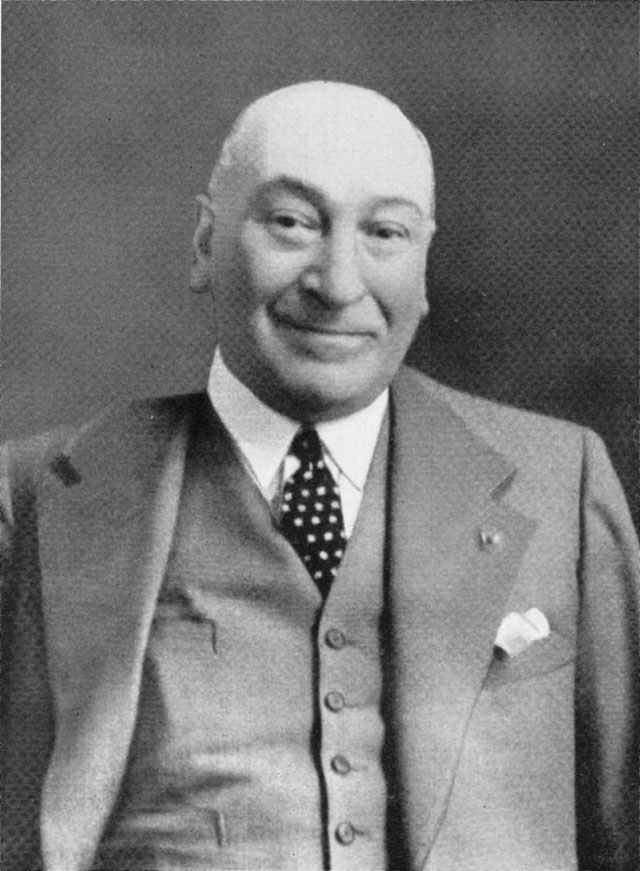
A character from a novel, a film hero – Angelo Donati was all that, and much more. His story is known only to his relatives, of course, to historians, and to the Jews who, in the darkest days, sought refuge in the south-east. Serge Klarsfeld said of him: “He lived up to his first name; he was an angel for the Jews.”
On November 11, 1942, in response to the Allied landings in North Africa, the Germans invaded the “free zone”. Under an agreement between the Reich and fascist Italy, eight French departments were handed over to Italy: Alpes-Maritimes, Hautes-Alpes, Basses-Alpes (today Alpes-de-Haute-Provence), Drôme, Isère, Savoie, Haute-Savoie and Var.
I believe I have been sent here from Heaven to help you: I am one of your own, from long ago!
For ten months, the Italian zone was to be “the Jews’ paradise”. None of the anti-Jewish laws enacted by Vichy were applied there during that period. The government in Rome sent Guido Lospinoso, Inspector General of the “Racial Police”, to Nice. This was a stroke of luck for the Jewish community. He contacted the leaders of the “Comité Dubouchage” and told them: “I believe I have been sent here from Heaven to help you: I am one of your own, from long ago!” Lospinoso was probably a distant descendant of the Spanish Marranos, and he considered himself, in a way, a refugee too. Under his authority, the Italians came into open conflict with the local Pétainists by granting residence permits to Jewish refugees.
From the very beginning of the Italian occupation, our hero entered the scene. Angelo Donati, born in 1885 into a prominent Jewish family in Modena, was during the First World War a liaison officer between the Italian army and the French forces, then allies. He then settled in Paris, where he founded the Banque Franco-Italienne. President of the Italian Chamber of Commerce in France, he was showered with honours: Commander of the Legion of Honour and decorated with the Order of the Crown of Italy. In June 1940 he fled the Germans and settled in Nice, in a sumptuous flat on the Promenade des Anglais. He was obsessed with helping his persecuted fellow Jews. As soon as the Italians arrived, he too made contact with the Comité Dubouchage, two of whose delegates, Michel Topiol and Ignace Fink, became his main contacts. He raised funds to help the utterly destitute Jews who were flocking to the Alpes-Maritimes. And he became the éminence grise of Lospinoso, with whom he got on perfectly. The effectiveness of their joint action was impressive. More than 3,500 Jews without legal status were sent to supervised residence in Haute-Savoie and a few mountain villages. Families were reunited, the Jews were treated very decently and Italian supervision was rather light. And for those living near the Swiss border, escape was organised, sometimes successfully. Most of these poor people never knew to whom they owed this happy interlude. Others felt deep gratitude to Donati. Thus the boys born in Saint-Martin-Vésubie in 1942/1943 were all named… Angelo.
Christians feel they are the spiritual sons of the great Patriarch Abraham… which should be enough to rule out all antisemitism, a movement in which we can have no part
Donati’s ambitions went much further. He wanted to save the 40,000 or so Jews in the Italian zone. The idea – which, with hindsight, seems a little mad – was to transfer the refugees to Genoa across the Alps. He met Father Marie-Benoît, a Capuchin friar who had been living in Rome when Italy entered the war. He too was devoting all his efforts to rescuing the Jews of the South of France. Among other things, he wrote: “Christians feel they are the spiritual sons of the great Patriarch Abraham… which should be enough to rule out all antisemitism, a movement in which we can have no part.” Donati persuaded the Capuchin to request an audience with Pope Pius XII. On July 16, 1943 (what an anniversary!), the meeting took place at the Vatican. His account of events in occupied France drew this reaction from the Pope: “One would not have believed this of France.” He promised to take a personal interest in the fate of the Jews of France. As far as we know, nothing was done.
On July 25, 1943, Mussolini fell. Donati, whom nothing could stop, now planned to get the refugees from Italy to North Africa. He went to Rome, where he met Father Marie-Benoît again. Together they obtained agreement in principle from the British and American ambassadors. The rescue was worked out in every detail. Marshal Badoglio’s new government placed eighty lorries, an Italian police escort and four warships at the rescuers’ disposal. Everything was ready, and Angelo Donati went to visit his brother in Florence. On September 8, Italian radio announced that an armistice had been signed between the Allies and Badoglio. Disaster! General Eisenhower had just broken his solemn promise to keep secret the agreement he had concluded on September 3 with the new Italian government. The Germans, who had been impatiently waiting for this opportunity, invaded the eight protected departments. The Jewish refugees in the Alps hurried south in lorries chartered by Donati. A great many of them ended up in Nice, as if caught in a net. The Nazi repression was terrible; arrests of Jews and their dispatch to Drancy went on day and night. The French collaborators found their voice again at last, and denunciations made the new occupiers’ task easier. The Comité Dubouchage was dissolved and went underground.
The Marcel network (Moussa Abadi and Odette Rosenstock), with the powerful help of Monseigneur Rémond, Bishop of Nice, took in the children entrusted to it by parents in distress. But that is another story.
…when it became clear that the parents would not come back, he adopted Marianne and her brother Rolf
Donati could not return to France: the Germans had put a price on his head. SS commander Röthke demanded by telegram the immediate arrest of “the Jew Donati, protector of the Jews”. Let us go back a moment. In August 1942, in the days of the “free zone”, the Spier family, driven out of Germany by the anti-Jewish laws, was living in Cap-d’Ail. After being held in the camps of the South of France, they had at last found peace on the Côte d’Azur. And it was French gendarmes who came to arrest them and take them to the Auvare barracks in Nice. The parents were separated from the children and were deported, never to return. And that is where the miracle happened. Angelo Donati, a cousin by marriage, was alerted. He came to fetch the children himself, sheltered them and got them into Italy. Later, when it became clear that the parents would not come back, he adopted Marianne and her brother Rolf. Marianne Spier-Donati recently published her extraordinary story, written by Olga Tarcali (Retour à Erfurt).
Every romantic tale needs an epilogue. Angelo Donati took refuge in Switzerland, where he continued his work on behalf of the Jews. At the Liberation, he was one of the first Italians allowed to return to France. He was appointed Delegate General of the Italian Red Cross and Minister Plenipotentiary of the Republic of San Marino.
On April 26, 1966, Yad Vashem awarded Father Marie-Benoît the title of “Righteous Among the Nations”. Angelo Donati was not eligible for this distinction, since he was Jewish. He died in Paris in 1960.
Victor Kuperminc
Bibliography:
Serge Klarsfeld: Le calendrier de la persécution des Juifs en France. Fayard.
Lucien Lazare: Dictionnaire des Justes de France. Fayard.
Georges Loinger: Organisation juive de combat. Autrement
Anny Latour: La résistance juive en France. Stock.
Olga Tarcali: Retour à Erfurt
Article published in the “Bulletin des Enfants Cachés” of December 2003, and republished by “Liberté du Judaïsme” in May 2016.