
International Holocaust Remembrance Day: how a Syrian saved 527 Jewish children from the Nazis
Holly Johnston (The National)
January 26, 2023

Moussa Abadi and his French wife Odette hid hundreds of children from the Nazis in homes, convents and orphanages in the south of France.
Andrée Poch-Karsenti was not yet three when her parents were arrested at their home on a quiet street above the Mediterranean in the city of Nice, in the south of France.
She escaped the clutches of the Gestapo because she happened to be playing with her neighbour Jacques across the street.
Her parents and aunts would not survive the war; they were sent to the Drancy camp and then to Auschwitz.
But thanks to a clandestine network set up by a courageous Jewish couple – a French doctor and a Syrian from Damascus – Andrée evaded the Gestapo.
Moussa Abadi was born into a religious family in the Jewish quarter of Damascus in 1910. He attended a school run by French priests, which would pave the way for his eventual move to Paris in the 1920s.
When the Nazis invaded Paris in 1940, Moussa fled south, leaving the capital by bicycle with a single change of clothes.
He arrived in Nice, later occupied by the Italians, where thousands of Jewish families were seeking refuge. Damascus urged him to come home, but he refused.
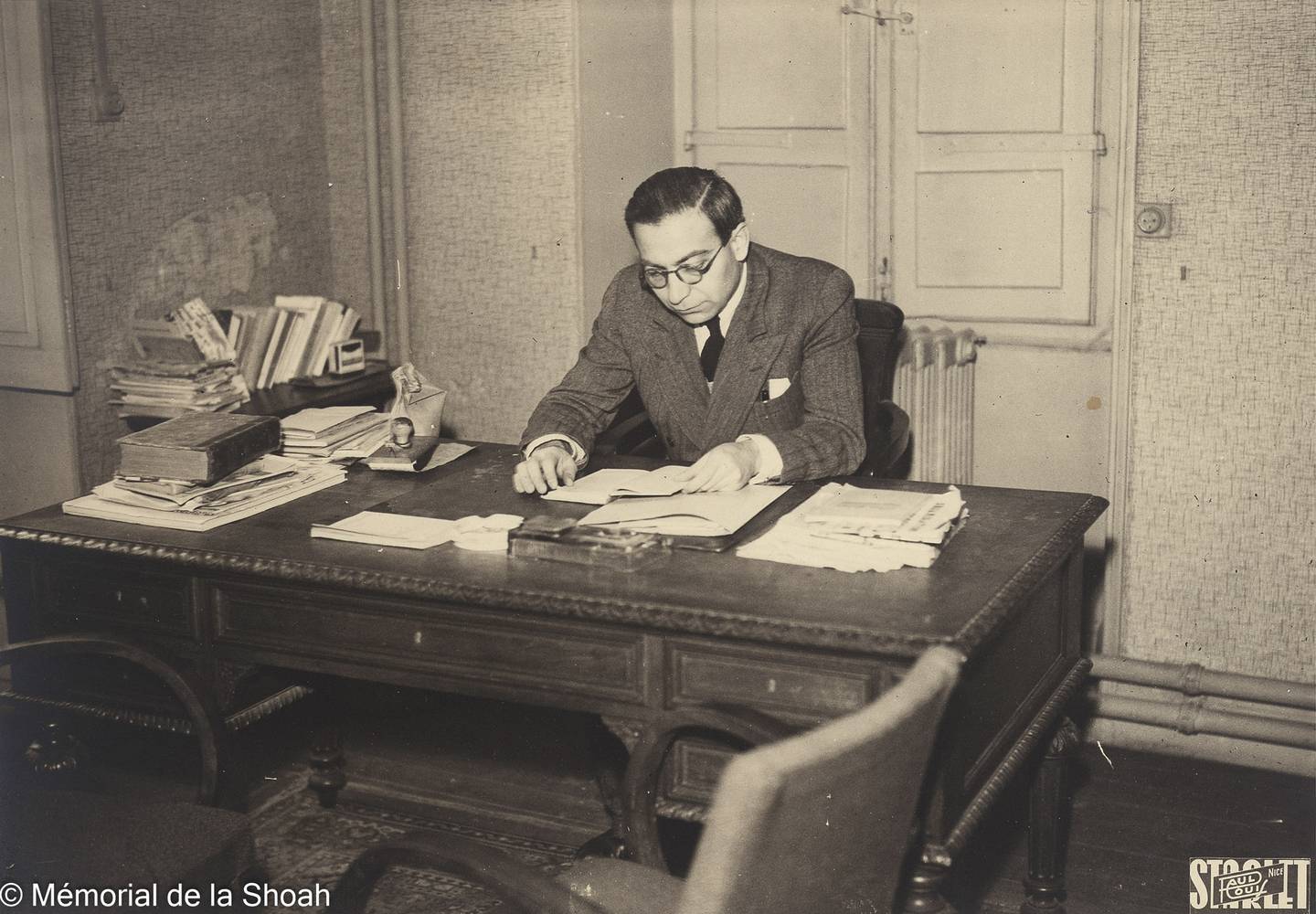
Moussa Abadi at his office in Nice in 1947. Mémorial de la Shoah / Coll. Odette Abadi
One day, under a “postcard-blue sky”, Moussa saw a young Jewish woman being beaten by a French policeman on the seafront promenade.
While the Nazis ruled the north, the Italians kept the Jewish population relatively safe – for a while.
But Moussa knew the Germans could push south. Even under the French authorities, round-ups in early 1942 had sent thousands of Jewish families to their deaths.
Moussa later met an Italian priest who told him that Jewish children were being massacred by the Nazis.
These two encounters drove him to take the greatest risk of his life, together with the woman who would later become his wife, Odette Rosenstock.

Odette Abadi, photographed in 1947 or 1948. Mémorial de la Shoah / Collection Odette Abadi.
Andrée was one of hundreds of children hidden by Moussa and Odette through the Marcel network, which the couple set up in 1943 after the German invasion of Nice.
In a year, they saved 527 Jewish children with the help of local families, Christian clergy and children’s homes. Many of those helpers would later be honoured by Israel as “Righteous Among the Nations” for their bravery.
Andrée is now 82 and lives near Paris. But for decades she knew nothing of the couple who had helped her escape the Nazis.
“I knew I had been hidden by the Rous [family] and that my parents had been deported, but I didn’t know the rest of the story. Nobody had told me about it,” she told The National.
Andrée was taken in by her neighbours, the Rous family, and hidden in a mountain village until the spring of 1944, when the Gestapo arrived to go after resistance fighters.
She was then brought back to Nice and placed in a children’s home by Odette and Moussa.
It was not until 1995 that fate brought them together again, when her brother came across a list of children hidden during the war.
Odette had been looking for them. Andrée called Odette and found that the couple lived not far from her home in Vincennes.
“They were an extraordinary couple who led an extraordinary life,” she says.
“They could have hidden, but they decided to risk their lives to save children who were condemned to death. They were courage personified.”
The couple would later meet some of the hidden children, getting together in restaurants in Paris and meeting their grandchildren.
On rare occasions they invited them to their modest flat in the 12th arrondissement.
Odette, a French doctor from Paris, had met Moussa in 1939. After fleeing to Nice, she began working at a clinic for Jewish children on boulevard Dubouchage, where she told families: “If the Germans come, we can hide your children.”
They had neither money nor connections. Both Jewish, they faced deportation and death.
“Every morning, when I had my coffee with Odette, I didn’t know whether I would find her safe that evening, or even whether I would be alive,” Moussa would later write.
He met the Bishop of Nice, Paul Rémond, and begged him to help save children from the Nazis.
The bishop gave Moussa an office in his residence, on the ground floor, so that he could escape if and when the Germans came.
It was here that Moussa produced thousands of false documents, baptism certificates and ration cards. In the garden he buried records that would allow the children to be reunited with their families at the end of the war.
Odette called on local children’s homes and on Protestant pastors near the synagogue on rue Dubouchage, who in turn called on local families for help.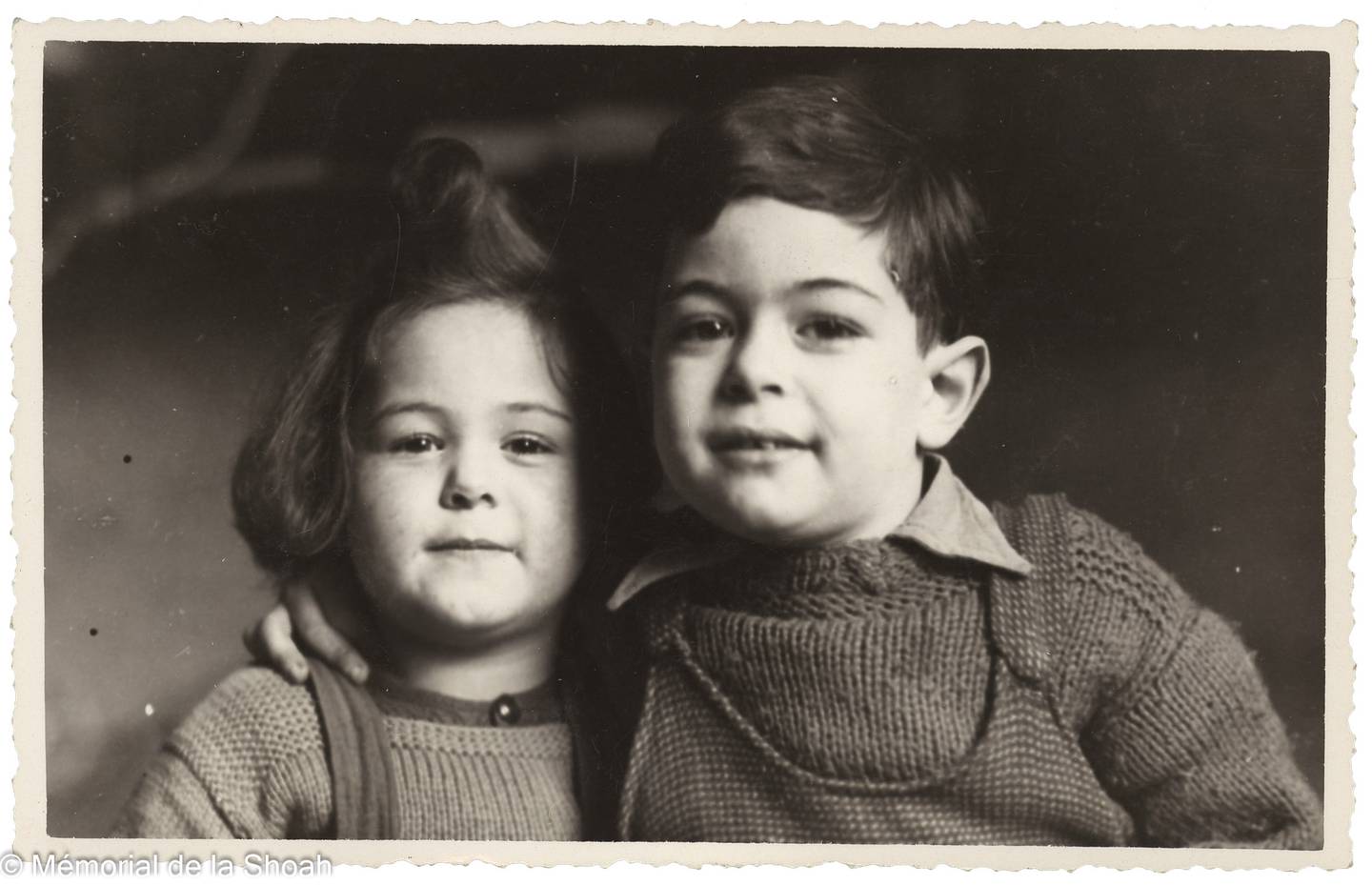
Armand and Eve Herscovici, hidden by the Marcel network, photographed in 1943 or 1944. Mémorial de la Shoah / Collection Odette Abadi
The children were taken to a “depersonalisation” house where their new identities were drummed into them before they were sent into hiding.
Some of them were so young that they could not speak French or understand why their names had changed.
Some children hidden together took turns to sleep, terrified of revealing their true identity in their sleep.
“We had to teach them ten times over,” Odette recalled in an interview. “They carried secrets too heavy for children,” said Moussa.
Daniel Czerwona-Jagoda was a child hidden by the network, placed in a convent at the age of five.
At the end of the war, his father criss-crossed Nice by bicycle for weeks, searching for his son in every convent in the city.
He finally found his son thanks to a Polish nun.
“Yes, Daniel is here, but his name is now Daniel Blanchi,” she told him.
Now 84, Daniel wrote poetry later in life and signed it with three surnames – Czerwona-Jagoda, Blanchi and Chervonaz. He chose the last as an adult, fearing that another war might break out.
“Odette and Moussa – I was really touched by what they did,” his daughter Sarah told The National.
She paid tribute to the couple and to her father in a show inspired by his life and his childhood memories, in which “little children had to behave like grown-ups. Little by little, they had to change who they were because their lives were on the line”.
Despite his experience, her father taught her to be positive and that you must always move forward, but his experience stayed with him.
“There were little flashes,” says Sarah. “If we had to be quiet, we had to be completely silent and still. It was as if it could put the whole family in danger, as if someone were knocking at the door.
“But there was always a reason, never a complaint. It was never negative.”
“You owe us nothing”
The Catholic Church gave Odette and Moussa false titles so that they could avoid arrest and visit the children hidden throughout the diocese.
Odette visited the children, posing as a social worker, while Moussa stayed at the bishop’s residence drawing up documents.
Only two children hidden by the network were arrested, after their hiding place was betrayed.
Odette saw them on a bus and was waved away by one of the children when she realised they were surrounded by plain-clothes police officers.
She was arrested a few days later and deported to Auschwitz.
As a doctor, she worked in the camp clinic and was aware of many horrors beyond the reach of other inmates, trying to prevent sick prisoners from being selected by Josef Mengele, nicknamed the “Angel of Death” for his experiments on prisoners.
Odette was then sent to Bergen-Belsen until the liberation.
Moussa was left in Nice to run the network alone, also evading capture by the Nazis. He began going to Catholic Mass in a different church every few hours to try to stay under the radar.
After the war, Odette would admit that she had come through it better than Moussa, saying that it is sometimes harder for those who are not deported.
Moussa and Odette said almost nothing about their heroic efforts, which earned them several of France’s highest honours.
Moussa became a renowned radio theatre critic and wrote two books about Jewish life in a Damascus ghetto, while Odette rose through the ranks of medicine and later worked at a school for deaf children.
They refused to speak publicly until they were in their eighties, when the first stirrings of Holocaust denial began in France.
“When we meet hidden children again, the question they most often ask is: ‘How can we thank you?’” Moussa told the French Senate in 1995.
“My answer will be brief. You have nothing to thank us for, because you owe us nothing. It is we who are in your debt.”
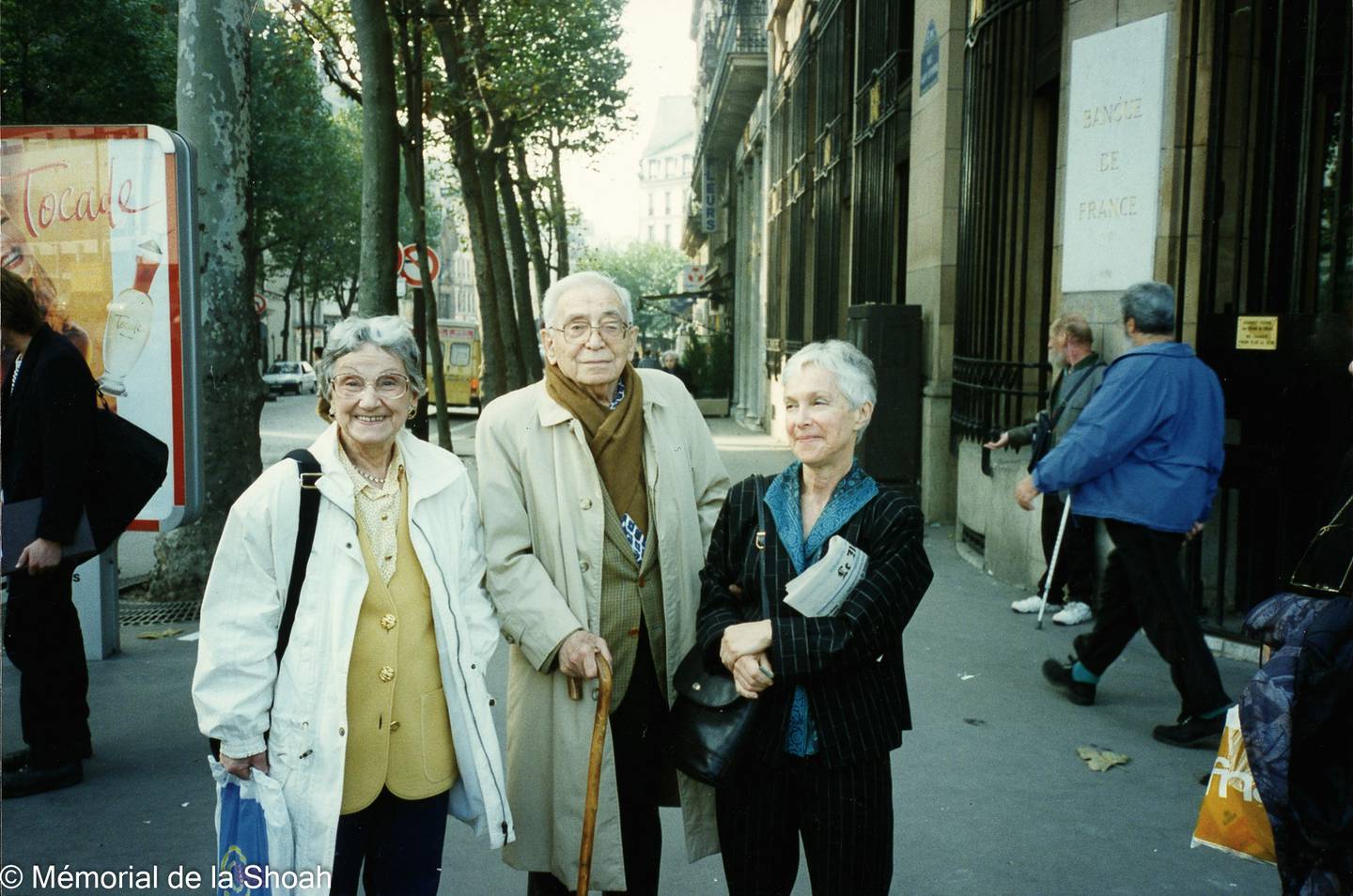
From left to right: Odette Abadi, Moussa Abadi and their friend Betty Saville in Paris in 1994. Mémorial de la Shoah / Collection Odette Abadi
Moussa stayed in touch with his family from Syria, visiting his cousin in Argentina, where he confided in some members of his family about his wartime past but swore them to secrecy.
“I felt as awestruck as if they were talking to Clark Kent. He was a superhero, a real superhero,” his cousin’s grandson, Carlos, told The National.
“They only talked about it because they felt they had to. He wanted to take it with him to his grave.”
Moussa’s health declined in the last years of his life, until he was almost blind. He died of stomach cancer in 1997.
Odette spent the last two years of her life gathering all the documents, completing the transcription of a book that he had dictated to her as his eyesight failed.
She took her own life in 1999, writing that she had died with Moussa.
“They were the kind of couple we don’t see today,” says Andrée. “They loved each other. She did everything she could to make his memory live on. She always put him first.”
Andrée now heads the association “Les Enfants et Amis Abadi”, which tells the story of the Marcel network.
“Because Odette and Moussa never said anything, nobody knew about them. We want to carry on their memory and that of the Shoah. As long as I am able to, that is what I will do.”