
Meeting at the Parc des Princes demonstration primary school
January 21, 2025
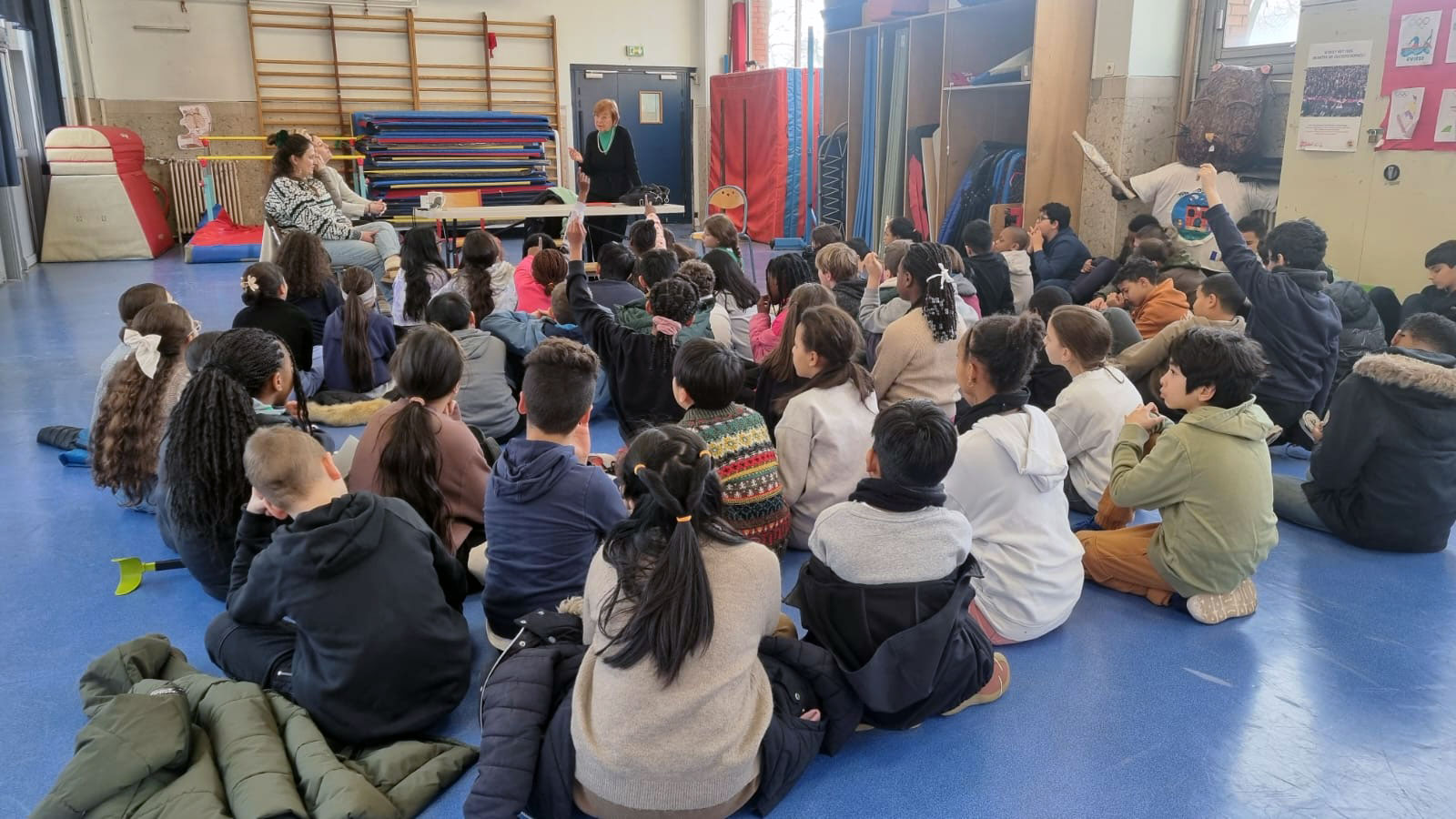
On Tuesday, January 21 we had the good fortune to welcome Andrée to the school for all our final-year primary pupils. They were impressed to meet a living witness of the Second World War! They already had some information about her, her family and her life as a hidden child, and had prepared questions.
But she began by asking them questions – these children of 2025, in their last year of primary school. How do you create a network? How do you save children who are likely to die if they are not hidden? By pooling what they knew about the situation in 1942 – the means of communication of the time, no Internet, no mobile phones, ration tickets, potential informers everywhere, laws forbidding Jews to practise their professions, the yellow star, foreign-sounding names – the pupils thought it through. There had to be several people, but only trustworthy ones; they had to be able to eat, find lodging, and find hiding places for all the children to be saved. She explained to them the need to make false papers – false identity documents without the word “Jew” on them – ration tickets, and the little index cards holding all the now-secret information about the hidden children who had changed their names. They found it very hard that little ones had to get used to no longer answering to their first names or surnames, or risk being arrested and deported; it was hard and violent, but essential for survival. Above all, Protestant, Catholic and atheist families, and Catholic institutions, had to volunteer to take the children in, hide them and look after them. If they were discovered or denounced, they risked prison, deportation, death. It was the idea that the Nazis were attacking even children that is said to have convinced Monseigneur Rémond to get involved in the network.
She told them the story of Odette and Moussa – resisters, in love, in love with life and freedom. Moussa, a Syrian Jew, met a witness of the horrors the Nazis were committing in the camps, Father Penitenti. With Odette, he decided to join the Resistance and to concentrate above all on the children. They lived in the unoccupied zone but had to move around; they sent each other messages using the cards provided by the authorities. Andrée brought us examples of these cards, photos, and Odette’s yellow star. Moussa persuaded Monseigneur Rémond, Archbishop-Bishop of Nice, who provided premises and the means to make false papers, and appointed him Monsieur Marcel Delattre, diction teacher for priests; Odette Rosenstock, a doctor at the clinic, became Madame Delattre, social worker. With these false papers and this “cover”, they could move about more easily to save the children. As Odette worked at the clinic, she knew the families and the children, so parents were able to entrust their children to her with confidence to be hidden. They wrote all the information on little index cards, hidden in the garden of the bishop’s house or in archives; we saw a photo of them.
Odette and Moussa, helped by the members of the Marcel network, saved 527 Jewish children between 1942 and 1944. Odette was arrested and deported; she survived the camps and went back to work as a doctor after the war.
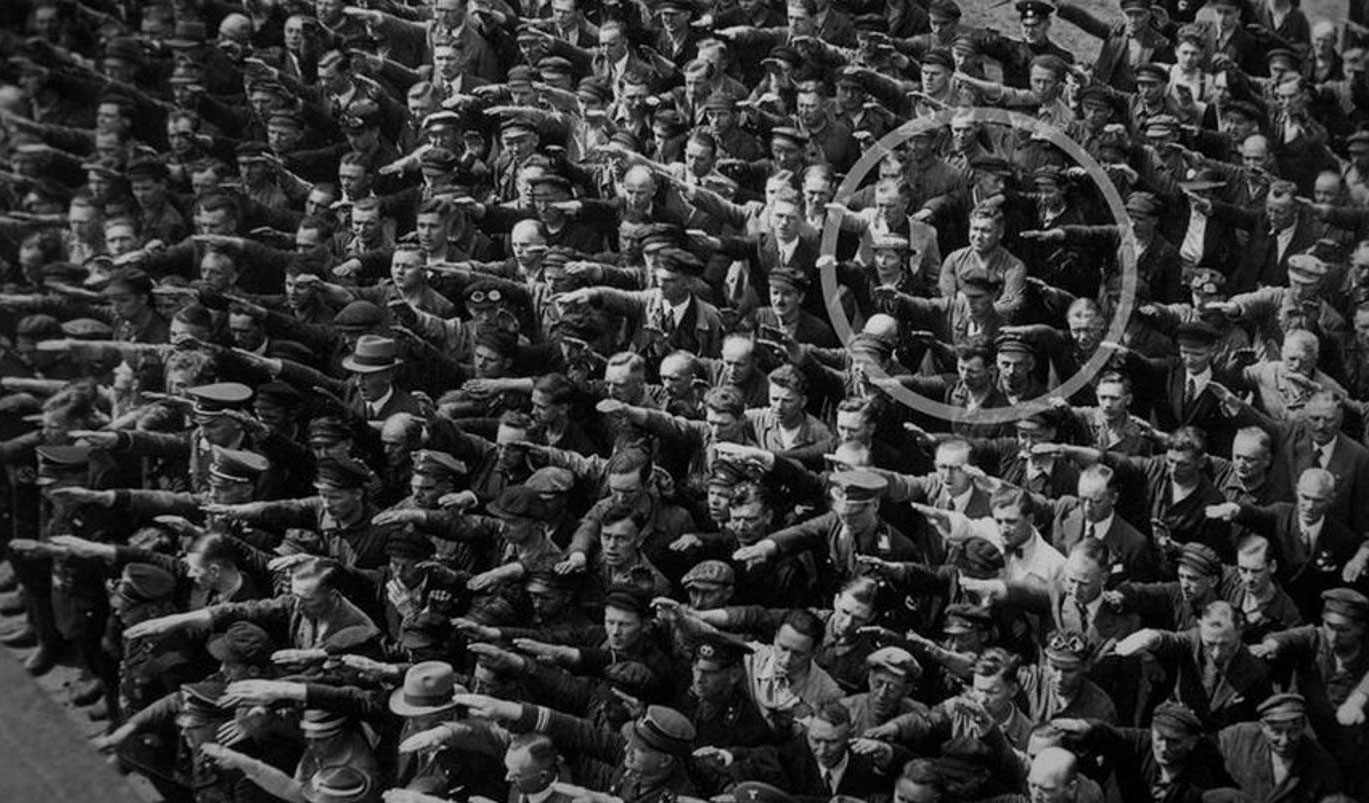
Andrée gives talks in primary and secondary schools; she finds it hard to talk about herself, but she is happy to be able to pass on what the Marcel network did during the war. She is one of the “Abadi children”. Her parents did not come back from deportation, but she found her brothers again, who had been hidden elsewhere. She showed us a poster of a crowd of men all raising their arms in the Nazi salute. All of them? No – one alone dares to keep his arms folded. Refusing to do as everyone else does can be a form of commitment.
Andrée became a paediatric nurse, so she too looked after little children. She married and had children and grandchildren. And she asks the pupils she meets to commit themselves too, to become witnesses, to know how to say no to injustice, racism, antisemitism and hatred of others.
Armelle Gonzales-de-Trébons
Head teacher
The children’s reactions
Andrée is a child who was saved during the Second World War. She was hidden by resisters until 1945. She told us the story she lived through, and above all she spoke about two people she is very attached to: Odette and Moussa. These two people hid hundreds of Jewish children, including Andrée. At first they did not know each other; then one day they met, and they lived in France [Moussa was Syrian – Ed.].
Moussa wanted to stop the war, and one day he met a priest who told him that men, women and children were being taken to camps where they died. Moussa did not believe what he heard, then he realised it was true. He went to see Monseigneur Rémond, Bishop of Nice, whom he had met through his theatre activities at the university. He asked him whether he could house Jewish children in Catholic schools, make false papers for the hidden Jewish children, give Odette and himself jobs and false papers, and help the people who would hide the children. The bishop agreed without hesitation and helped him make the false papers, because if the police or the Germans came, everyone would be arrested.
It was thanks to this network of Jewish and non-Jewish resisters that Odette and Moussa were able to save 527 Jewish children persecuted during the war. WELL DONE TO THEM!!!
We asked her our questions, and it was wonderful and extremely moving to meet a person who had lived through the horrors committed during the Second World War and to hear her testimony.
Noham, class CM2B, and class CM2A